
Sources for Lakeville Previous Residents
Lakeville address history starts with land records and then adds household evidence. The county parcel record supplies the current Parcel ID and legal description. Recorded documents connect interests in that land over time. Historical telephone directories and census material can then show named households near a date. Each source has a different scope, so a property owner, subscriber, and census resident should remain separate labels in the research notes.
| Source | Years It Covers | Where Held | What It Shows |
|---|---|---|---|
| Dakota County parcel record | Current and prior tax fields | Dakota County Property Information | Parcel ID, situs, owner or mailing role, legal description, tax and building facts |
| RecordEASE abstract index | July 8, 1993 forward online | Dakota County recorder system | Grantor, grantee, instrument, date, document number, book or page, and legal description |
| Lakeville telephone directories | 1931 through later material at least to 2011 | MNHS print and microfiche holdings | Dated subscriber, address, telephone, and exchange context |
| DCHS and census material | 1920 material; federal census through 1950 | Dakota County Historical Society and census repositories | Household relationships, age, birthplace, address or town where indexed |
| Building and historic-map records | Project and map-series dates vary | Lakeville Building Inspections and Dakota County maps | Construction, alteration, map, plat, road, and lot context |
Start with the parcel when the address is known. Start with a directory or census when the goal is a past household. Move between them through the legal description, the historical street form, the year, and a carefully checked name. A tax card is not a deed chain, and a directory listing is not proof that every person at an address was recorded.
Lakeville Previous Residents Parcel Clues
The free Dakota County Property Information search accepts a street address or Parcel ID. Save the Parcel ID, situs address, municipality, legal description, plat or lot and block, current tax-owner name, owner mailing address, building facts, school district, and watershed fields. The legal description is the durable link for older land records. A street number can be printed differently across decades or be absent from an older document.
County information can show a tax owner or a mailing recipient, but neither field proves who occupied the Lakeville address at a particular time. It may identify a person, a trust, a business, or a different correspondence address. Record the role exactly as the county displays it before comparing it with a deed or historical household source.
Note: A parcel’s tax mailing field is correspondence information, not a substitute for dated evidence about a Lakeville household.
Lakeville Previous Residents in RecordEASE
RecordEASE is Dakota County's account and payment-gated recorder route. The public abstract index begins online on July 8, 1993. Its relevant search concepts are grantor, grantee, legal description, and document type. A result should be logged with the parties, recording date, document number, book or page, instrument type, legal description, abstract or Torrens status, and whether an image is available. The exact live fields require the account interface and should not be assumed from a generic deed search.
Visit the Dakota County RecordEASE access page before beginning the recorded-document portion of a Lakeville address history.
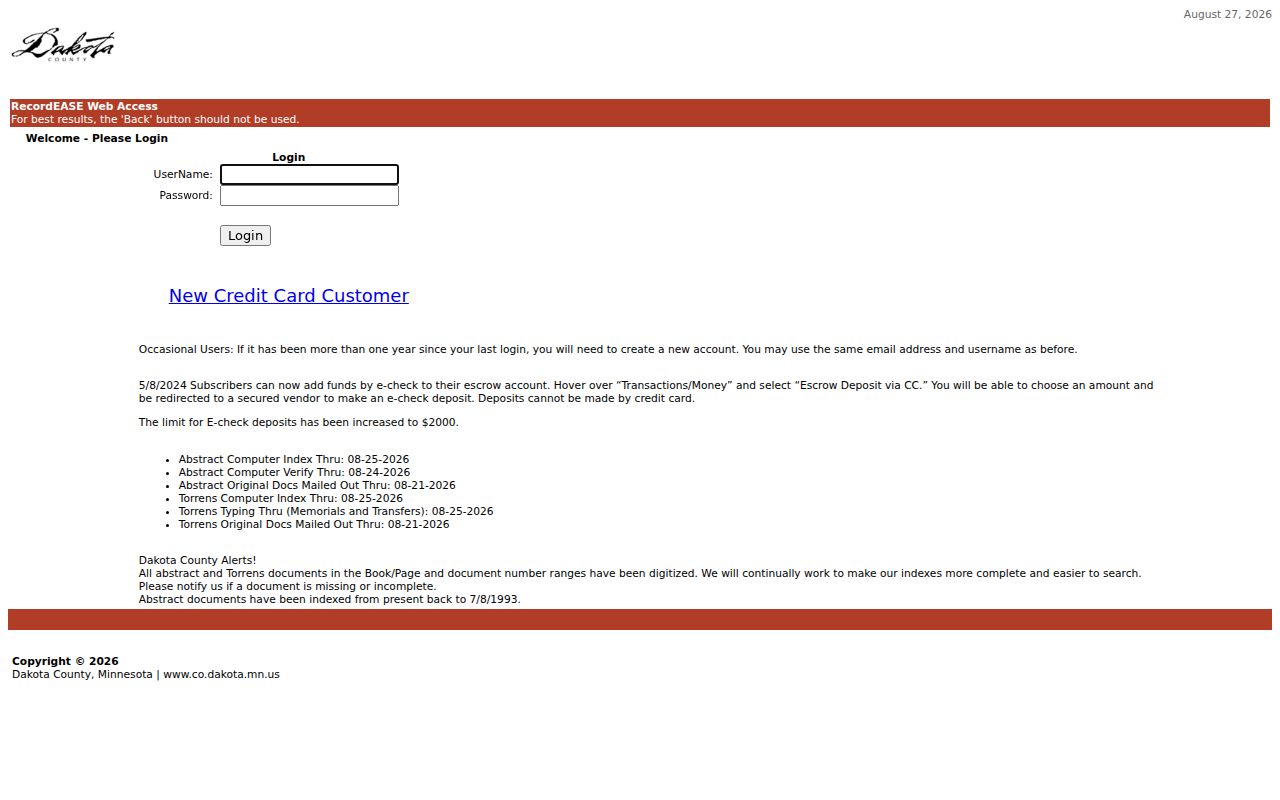
The index is a starting point, not proof by itself. Compare the returned instrument with the parcel's legal description before placing a person in the title chain.
Trace Lakeville Previous Residents Deeds
Work backward one recorded transfer at a time. The current parcel information gives the land description and a current tax-account lead. The deed that placed the current owner in title identifies the seller. That seller becomes the earlier party to trace. This is a title-history method, not an occupancy list, but it creates the strongest chronological backbone for investigating who lived here before.
- Find the Lakeville parcel by address and preserve the Parcel ID, legal description, and plat or lot and block information.
- Search the current owner or grantee with the legal description and document type to locate the purchase instrument.
- Compare the deed's legal description with the parcel record, then log its grantor, grantee, date, document number, and book or page.
- Search the grantor as a grantee in an earlier period, using the same legal description and any prior name, then repeat.
- At the online boundary, continue through the Hastings office, deed books, or microfilm rather than treating a missing online match as a missing deed.
- Grantor
- The party transferring or conveying an interest in a recorded instrument.
- Grantee
- The party receiving that interest. A prior grantor can be searched as a still-earlier grantee.
- Chain of title
- The sequence of recorded transfers and interests linked through the same parcel or legal description.
- Legal description
- The lot, block, plat, or other land description used in the recorded system. It is often more stable than a street address.
Lakeville Previous Residents Before 1993
Older abstract records are not covered by the online cutoff. Dakota County directs researchers to the recorder's office, deed books, and microfilm for the earlier trail. The county recording office is at the Administration Center in Hastings, while county service centers in West St. Paul and Apple Valley also provide copy routes. A mail request can go to 1590 Highway 55, Attn: Research. Ask staff whether the parcel follows the abstract or Torrens route and supply the best legal-description and book or document details.
Dakota County online property-records guidance explains the recorder access route, images, and related fee information.
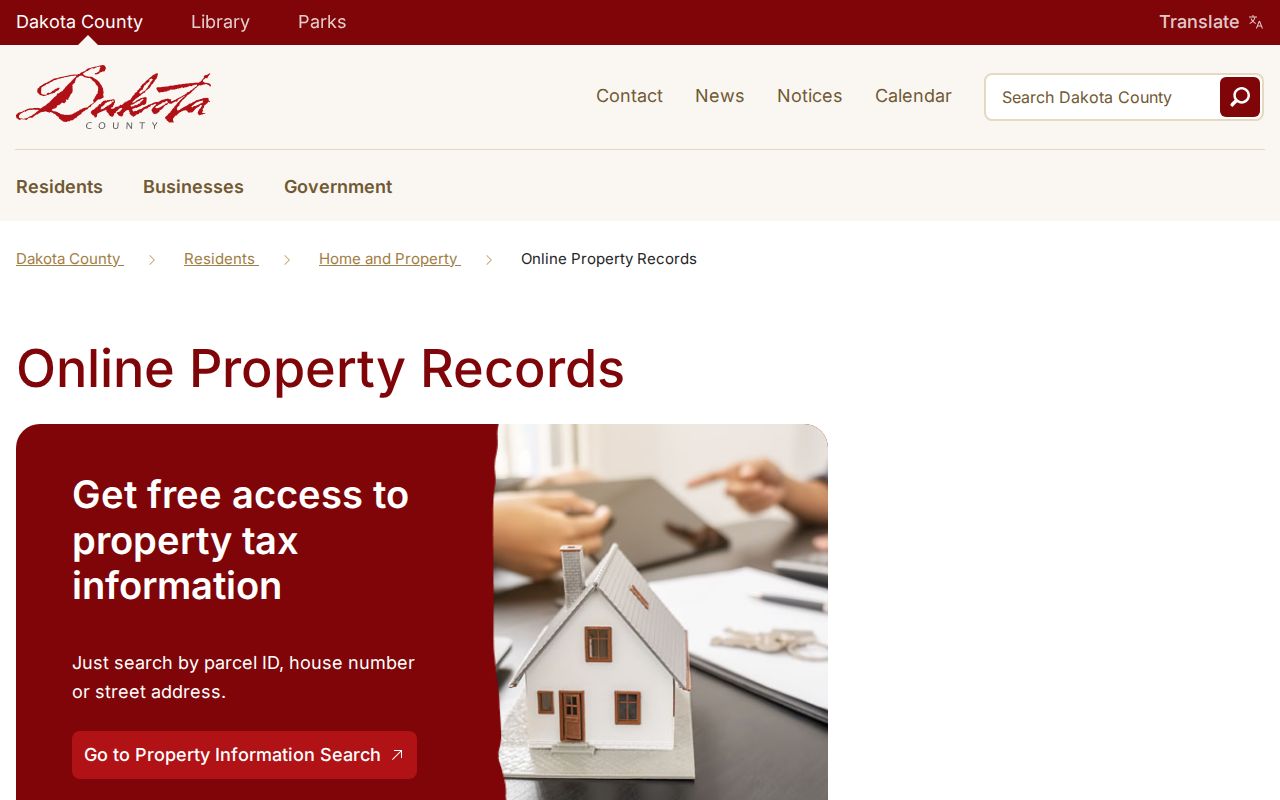
County purchase instructions list $1 per page or $10 for a certified copy, with 24 hours allowed for the request. Those figures concern copies, not every recorder service or recording fee.
Insider tip. Dakota County warns about mailed deed-copy offers above $90. Compare any solicitation with the county's own copy route and use the official recorder contact rather than the sender's payment link.
Note: Request the specific document or book range needed for the legal description instead of assuming an online result covers older Lakeville records.
Lakeville Previous Residents Household Trail
Land records answer who held an interest. Historical directories and census records answer a different question: which household was associated with a location near a date. MNHS holds Lakeville telephone material from 1931 and 1954, then a broad later run. DCHS has local census, church, cemetery, obituary, and newspaper research. The deeper collection context is available through the Lakeville city directory collections, while this address trail uses only the editions and years needed to test a deed-chain interval.
Use the MNHS directory research guidance before ordering or consulting a volume.
A telephone subscriber is not automatically every person in a household, so pair the entry with a census or another dated historical source.
- Choose a directory edition close to a recorded transfer or construction event and copy the entry exactly.
- Check the nearest available federal or Minnesota state census for the household, relationships, ages, birthplace, and address or town context.
- Compare the address, street form, and dates with the parcel and deed record. Preserve disagreements instead of forcing a match.
- Use DCHS obituary, cemetery, church, or newspaper leads to test an apparent departure or family connection with another source.
Lakeville Previous Residents Permit Dates
A city permit can date a property event without identifying a past household. Lakeville Building Inspections records may contain a site or mailing address, owner or applicant, project description, estimated value, proposed start and end dates, legal description, and related license information. The county tax card's year-built field is also a building characteristic, not the date that a family arrived. Use these dates to place construction, remodeling, inspection, utility, or planning activity alongside the recorded land trail.
The Lakeville Building Inspections route and a city data-practices request are the proper next steps when a project record matters. Ask for the specific address, project type, and date range. Some material can be classified or redacted, and a permit record should never be treated as a complete resident list.
Lakeville Previous Residents Map Clues
County historic maps help bridge the land record and the household record. Dakota County organizes series for 1916-71, 1972-86, 1987-2004, and 2007-25, with map books, plat maps, public terminals, and GIS help. Sanborn leads for Lakeville include 1895, 1902, 1910, 1919, 1924, and 1930, subject to item-level verification. A map can show a road, lot pattern, or structure context. It does not name all past residents.
No verified Lakeville-wide street-renumbering or readdressing year was found. When a number does not line up, carry the original plat and legal description through the search, compare dated maps, and retain the historical street spelling rather than inventing a conversion.
Note: A dated map helps reconcile land and address context, but it cannot establish a household without a separate historical record.
Lakeville Previous Residents Personal Use
Obituaries and probate files can help identify a historical endpoint, but neither proves that an heir owned or occupied the Lakeville parcel. An obituary is a published death or family notice that should be verified with a vital, cemetery, church, or court source. The same caution applies to a historical subscriber or a party named in a recorded deed.
Lawful personal use. Use Lakeville address history for family history, estate questions, local history, and personal curiosity. Do not use records to monitor, harass, or harm a living person, and do not try to resolve a protected address.