
Lakeville City Directory Collections
The most continuous Lakeville run identified is in the Minnesota Historical Society telephone-directory finding aid. It lists a 1931 Lakeville directory, a 1954 directory, a substantial print and microfiche run from the 1960s through the 1990s, and later volumes or yellow-page sections through at least 2011. These are period telephone directories, not a single complete city roster. Their value is in the dated combination of subscriber name, telephone information, address or exchange context, and the edition itself.
| Collection | Years | Where Held | Access |
|---|---|---|---|
| Lakeville telephone directories | 1931; 1954; annual or near-annual 1960s-1990s; later material through at least 2011 | Minnesota Historical Society print and microfiche holdings | Finding aid, in-library consultation, or staff search |
| Central Telephone Directory | July 1945 | Dakota County Historical Society digital PDF | Online artifact; inspect the original page before citing a listing |
| DCHS 1920 census material | 1920 | Dakota County Historical Society | County historical-record research and indexes |
| Historic maps and plats | County series from 1916-2025 | Dakota County maps and public terminals | Map books, plat maps, historic series, and GIS help |
Keep the finding-aid shelf identifier and publication year with every result. An absent name may mean an unlisted number, a head-of-household convention, a move between publication dates, an initial used instead of a full name, a scope limit, or a missing volume. The holdings do not prove a continuous reverse-directory or criss-cross series for Lakeville, so ask the custodian what kind of volume exists for the exact year.
Lakeville Directory Years
The Lakeville sequence has useful anchors, but it should be read as a holdings trail rather than a promise of one volume for every year. The early examples are far apart, then the later run becomes much denser. This chronology helps choose the next source when a surname appears to vanish.
- 1931: the MNHS finding aid identifies an early Lakeville telephone directory.
- 1954: another identified Lakeville volume offers a mid-century check.
- 1960s-1990s: print and microfiche holdings provide annual or near-annual coverage in many years.
- Later 1990s-2011: volumes and yellow-page sections extend the known Lakeville run.
Telephone listings changed with private numbers, exchanges, and publisher practices. A close year is often better evidence than a distant volume that happens to have a similar name. Note: A date beside a listing establishes when that edition was issued, not a guaranteed move-in or move-out date.
Lakeville Historical Directory Help
The Lakeville Area Historical Society preserves and teaches local history from 20110 Holyoke Ave in Lakeville. Its published contact is 952-985-4680. It can be a useful first contact for local photographs, oral-history leads, organization history, and advice about whether an old name or address may appear in a private collection. Confirm hours with the society before visiting, because published city and society schedules can change.
For county-scale research, the Dakota County Historical Society records search brings together census, church, cemetery, obituary, marriage-announcement, newspaper, naturalization, plat, directory, oral-history, and photograph leads. DCHS lists a research service at $15 per half-hour. Give staff the surname, variant spellings, approximate year, Lakeville or historical township, street, and record type so they can distinguish nearby communities.
See the Lakeville Area Historical Society collection contact before planning a local-history visit.
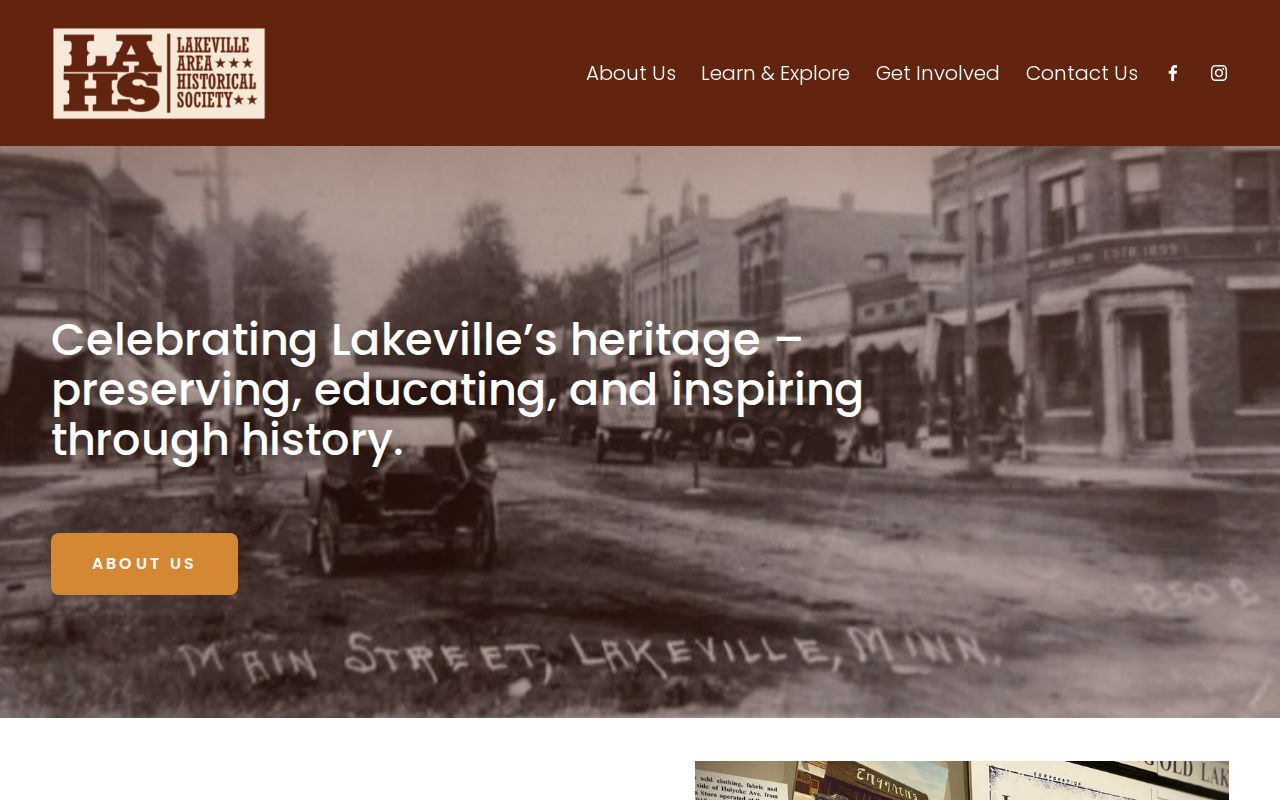
A local society does not replace the dated directory volume, but it can point a family-history search toward photographs, newspapers, and the right historical name for Lakeville.
Note: A local collection lead needs its own date, repository, and page or item reference before it can support a household conclusion.
Lakeville Directory Staff Search
When travel to the collection is not practical, the MNHS City Directory Search request provides a narrower way to inspect a specific historical question. Select City Directories, Telephone Books, or Both, then supply one name or business, Lakeville, and up to five requested years. The published cost is $10 for one source or $20 for both, with processing included. Results are sent by email, normally in three to four weeks and sometimes as long as twelve weeks.
Ask staff to check the exact requested page and retain a no-match result. That keeps the search auditable and avoids turning a partial run into an untested conclusion. It is also the right place to ask whether a selected year is a true directory, telephone book, reverse or criss-cross volume, or a yellow-pages-only section.
Reading Lakeville Directory Entries
A directory entry is a compact period record. Read the page heading, edition date, and abbreviation key before copying the line. Lakeville telephone books may put a surname first and show a given name or initial, a residence or business address, a telephone number, and an exchange or local convention. White pages normally sort people alphabetically. Yellow pages sort businesses by classification. The precise fields and abbreviations vary by publisher and year.
| Name form | Surname, given name, initial, or a head-of-household style that should be copied exactly. |
|---|---|
| Listing type | Residential subscriber, business listing, white-page entry, or yellow-page classification. |
| Address context | Street address or locality as printed, including an older spelling or township reference. |
| Telephone context | Number, exchange, or edition-specific telephone convention when printed. |
| Page evidence | Year, publisher, page number, and the abbreviation key that explains the line. |
- Criss-cross section
- A street-order part of a later directory, if the volume has one, used to move from an address toward listed names or businesses.
- Householder index
- An alphabetic arrangement that may list the person treated as the household’s principal subscriber rather than every person at the address.
- Abbreviation key
- The publisher’s explanation of shortened labels and symbols, often near the front of the volume; preserve it with a transcription.
Do not expand initials or infer a relationship from a line alone. A listing documents what the publisher printed for that edition. It does not, by itself, establish ownership, every person at an address, or a present-day connection.
Note: Copy the edition, page, exact spelling, and abbreviation key before comparing a Lakeville listing with another historical record.
Lakeville 1945 Telephone Artifact
The 1945 Central Telephone Directory is a DCHS digitized collection artifact, not a source for casually copied individual names. It is useful for observing the period’s exchange structure, the difference between white and classified pages, and local address conventions. The research record did not produce a reliably legible person-level extraction, so no individual entry should be transcribed from it without reviewing the original page.
This restraint matters. A historical directory can give a strong lead, but the page image, edition date, and another independent source are what turn that lead into a defensible family-history note.
Lakeville Historic Map Sets
Addresses change meaning when roads, plats, and subdivisions change. Dakota County Maps organizes historic map sets for 1916-71, 1972-86, 1987-2004, and 2007-25, and also identifies public terminals, map books, and plat maps. These map dates make a useful companion to a telephone directory because they can show whether a road, lot pattern, or structure context was already present.
Open the Dakota County historic map resources when a printed Lakeville address looks unfamiliar.
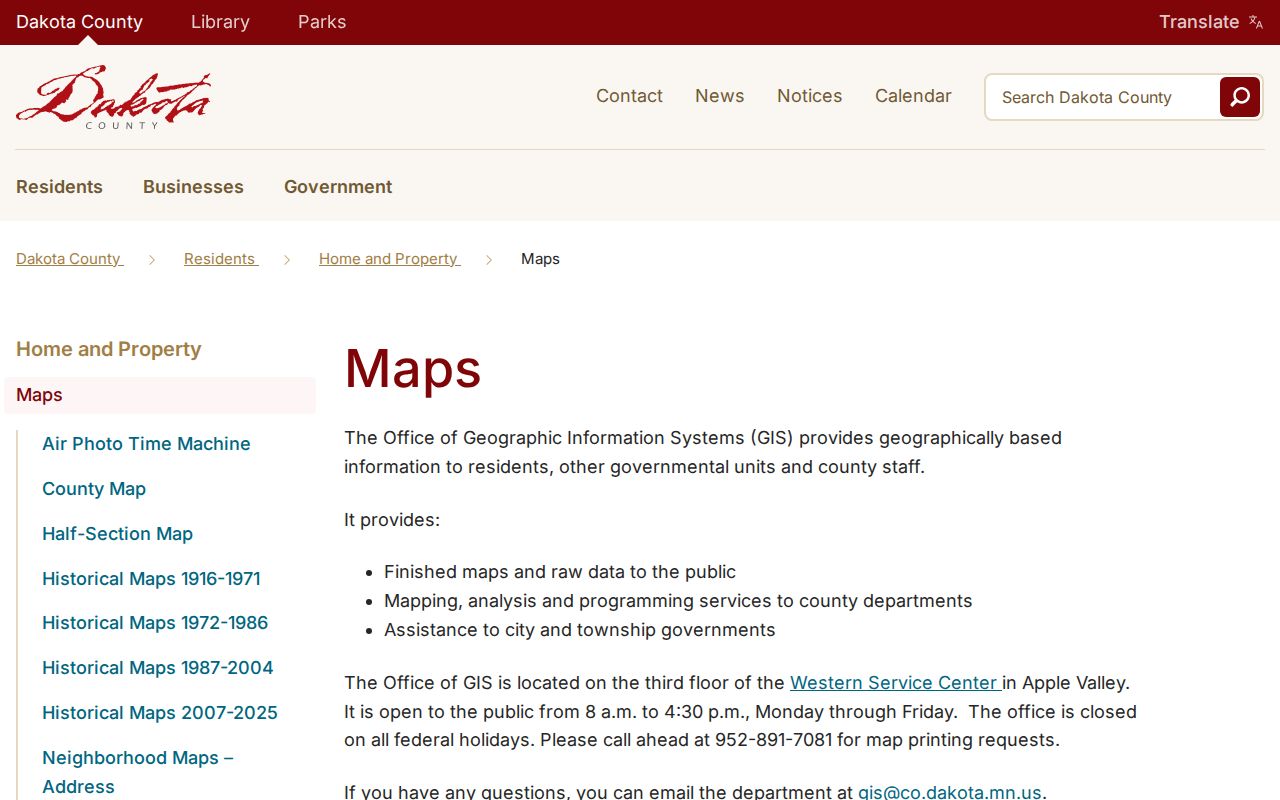
No verified citywide Lakeville street-renumbering year was found in the reviewed sources. Use the original plat, dated map, and historical street form to reconcile an old listing instead of assuming the modern number has always applied.
Trace Lakeville Directory Names
Use the directory sequence to create a careful household trail, not a quick identity claim. Start with the best-known spelling and a narrow date range. Each later listing can then be compared with a different record type that answers a different question. This method is especially useful when a surname appears in Lakeville, Rosemount, Farmington, or a historical township name at different times.
- Locate the first likely name in a dated Lakeville volume and record the exact spelling, page, and listing type.
- Check nearby editions, noting any change in address, initials, exchange, or absence.
- If a street-order section exists, inspect it as a separate index and record its page rather than merging it with the alphabetic entry.
- Pair the directory year with the nearest census or state census that is available for the period.
- Use an obituary, cemetery, church, or probate lead only to test the historical trail with an additional custodian or collection.
A disappearance can mean a move, an unlisted number, a different listing convention, a missing edition, or a death. It is not enough to choose among those explanations from the directory alone. The MNHS People Records Search and county historical material provide related dated indexes when a second source is needed.
Lakeville Census Pairing
The DCHS 1920 material can add household relationships, age, birthplace, address, and town where indexed. Federal census schedules are publicly available through 1950 under the release rule, while Minnesota state censuses provide additional snapshots in 1850, 1853, 1857, 1865, 1875, 1885, 1895, and 1905. A directory gives contact or address context near publication. A census records an enumerated household on its own date. They can disagree without either record being false.
Church, cemetery, and obituary results at DCHS can help close a historical question, but an obituary is a published notice rather than proof of every date or relationship. Confirm a result with the relevant record custodian or another independent historical source.
Note: Record the census date and directory publication year separately, because the two sources describe households at different points in time.
Lakeville Directory Limits
Myth: a historical city directory is a complete list of everyone in Lakeville. It is not. Telephone subscriptions, unlisted numbers, publisher coverage, household conventions, and missing volumes all shape what appears. A directory subscriber is also not automatically a property owner or every person connected to that address.
Use the dated record for family history, local history, and personal research. When a historical find needs a modern identity check, use the official sources appropriate to that question rather than carrying a decades-old listing forward. The Lakeville resident lookup has the separate current-record routes and their access limits.