
Finding Lakeville Residents by Record
No single public list names everyone in town. A Lakeville resident lookup instead follows the fact you want to verify. A current street address leads first to Dakota County parcel information. A full name with a date of birth supports a narrow voter-registration check. An older address may fit a telephone directory, census record, or deed better. Court, vital, and city files answer other questions entirely. Keep the record role beside every result. Then a tax owner or historical subscriber never becomes a mistaken claim about present residence.
Begin with one address, one name, or one year. Write down the source, the date, and the field that matched. A parcel's situs address is where the land sits. Its tax mailing address may point somewhere else. An old street directory gives a period listing, not a live contact. A first result may look promising. Test it against a second independent record rather than stretching into a broad household search.
- Use a Lakeville street address in the county property tool and save the parcel number, legal description, and returned tax-owner role.
- For one person, use the state registration lookup only with the required identifying information, then note whether it confirms a match or offers next steps.
- Search a recorded document when the question is ownership history, not present occupancy. The recorded parties and legal description create the title trail.
- For an earlier household, check the local historical collections, telephone-directory years, census material, and obituary indexes.
- When the needed government record is not online, ask the named custodian for the specific record, date range, address, or case number.
Note: A careful Lakeville residents directory search stops once the relevant record answers the question, never turning narrow evidence into a people list.
Lakeville Offices for Resident Records
Lakeville sits in Dakota County, though much county administration works from Hastings. The recorder and the Property Taxation & Records function operate there, while county GIS also serves the public through its network and terminals. City departments hold permits, planning material, utilities, and other municipal records. The Minnesota Secretary of State runs the statewide voter tools. The district court system keeps court material. Picking the office by record type beats treating City Hall as a catchall custodian.
Dakota County Property Taxation & Records
1590 Highway 55
Hastings, MN 55033
651-438-4597 research
Dakota County Property Information
Address or Parcel ID search
Online county property tool
952-891-7081 GIS maps
Minnesota Election Information
Registration and address match
Statewide official service
651-438-4305 county elections
The By Street page gathers the address-to-parcel route in one place. City records not indexed online can be requested through the municipal data-practices channel. Older material may lead to a historical collection instead of an office counter.
Lakeville Parcel Records by Address
The free Dakota County property interface accepts an address or a Parcel ID. A returned parcel can show the site address, municipality, legal description, owner or taxpayer mailing address, assessed values, tax details, building facts, school district, watershed district, and status fields. That is strong evidence about a tax parcel. It is not a complete Lakeville resident roll. A mailing address can belong to an individual, a trust, an entity, or a different address entirely. One parcel can also hold more than one unit. So a street directory built from parcels alone will miss some households.
| County field | How it helps | Limit to retain |
|---|---|---|
| Address or Parcel ID | Finds the county’s property record | It is a parcel key, not a person search |
| Situs and municipality | Locates the land in Lakeville | Does not establish who occupies it |
| Owner and mailing address | Identifies the tax-account role | May differ from the situs address |
| Legal description | Connects the parcel to plats and deeds | Needs comparison with the recorded instrument |
- Parcel
- A tax and map unit with a county identifier and geometry.
- Situs address
- The physical address the county assigns to the parcel.
- Index
- A finding tool that points to a record; it is not always the document itself.
- Criss-cross directory
- A historical directory organized from an address toward a subscriber, when that volume includes one.
Lakeville Voter Lookup Boundaries
Minnesota Voter Information is a narrow matching tool. It asks for a first name, last name, and date of birth. It then runs an address path through ZIP or county mode. The result confirms a registration match or provides official next steps. Updates happen nightly. However, a new or changed registration can take up to 14 days to appear. A no-match may simply reflect timing, spelling, address history, or another matching quirk.
| Field or mode | Purpose | Lakeville use |
|---|---|---|
| First and last name | Identifies the registration inquiry | Use exact spelling and no suffixes |
| Date of birth | Narrows one-person matching | Required for the public lookup |
| ZIP or county mode | Sets the address route | Choose the mode that matches the address |
| House number and street | Completes address matching | Unit information is conditional where applicable |
State law permits defined voter-list fields and authorized copies, but it restricts use and bars online searchable publication. A street-sorted walking list comes through the state request process with lawful-use certification, not by repeating public lookup searches. Lakeville residents needing an address-safety route can use voter withholding or the Safe at Home program.
Current Lakeville Resident Record Roles
Several current sources look directory-like, yet each identifies a different relationship. The county property map is best for the tax parcel and owner role. The recorder connects named parties to a recorded interest. The voter tool checks one registration match. MCRO identifies a case party and court event, never a street address. Keeping these roles straight is a useful Lakeville safeguard. It matters most when one name appears in several record systems.
| Lakeville source | Record role | Custodian | Access route |
|---|---|---|---|
| Property Information | Tax owner, mailing address, parcel facts | Dakota County | Free address or Parcel ID search |
| RecordEASE | Grantor, grantee, instrument party | County recorder | Account and session or subscriber access |
| Minnesota Voter Information | One registration match | Secretary of State | Name, date of birth, and address inputs |
| MCRO | Case party and docket events | Minnesota courts | Remote search or fuller courthouse access |
| Lakeville staff directory | City office contact | City of Lakeville | Department and name search |
Commercial people-finders can merge stale data and same-name people into a single misleading profile. Official sources give narrower answers, but they supply the custodian, date, and record role needed to test a result. For a focused one-person sequence, the Resident Lookup page pairs the most useful official routes.
Lakeville Data-Practices Requests
Lakeville’s Data Practices page is where the city opens its filing cabinets. The catalog spans building and inspection files, code-violation material, and plans. It also covers engineering as-builts, stormwater records, and environmental complaints. Fire records, licensing, and utility records round out the list. Requests go through JustFOIA. A strong request names the department, the record type, an address or project number, and a date range. It also states the desired format and whether inspection or copies are wanted. Classification still governs what gets released and what gets redacted.
The Minnesota Government Data Practices Act gives the public the right to inspect data at a reasonable time and place. Inspection is generally free. Copying, certification, staff work, and special electronic production can carry permitted costs. The law does not convert a private record into government data. Ask the custodian to identify the legal classification if information is withheld.
Start with the Lakeville Data Practices and Data Requests page before filing. The city’s own source below shows the linked request system.
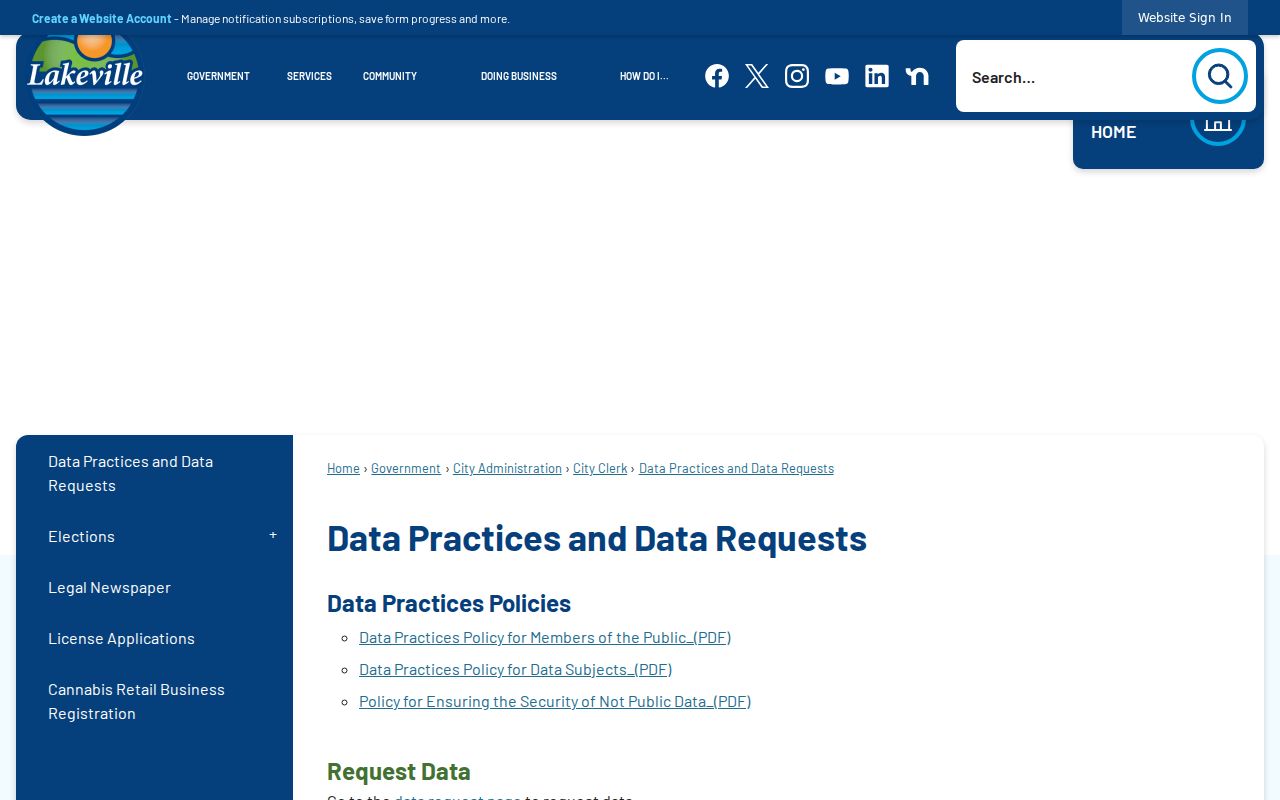
City-held records can document an address or project event. An applicant or project contact is not automatically a Lakeville resident, so treat a permit name as a lead rather than proof in any resident lookup.
Lakeville Vital Record Routes
Vital records answer event and family-history questions, not current-address questions. The Minnesota Department of Health holds births from 1900 forward and deaths from 1908 forward. Earlier events lead back to the county of occurrence. Marriage certificates come from the county that issued the license. Divorce decrees come from the district court that granted them. Birth records can carry tangible-interest and confidentiality limits, with special treatment for unmarried-parent records. A noncertified birth verification has a narrower scope than a certified certificate.
The state’s available-records guidance separates the custodian, the product, and the eligibility path. That separation keeps family records from serving as a general Lakeville residents directory. For an older local event, county, church, and cemetery material may be the better starting point. Newspaper and historical-society material may help as well.
The Minnesota Department of Health available-records page explains the state route and its eligibility information.
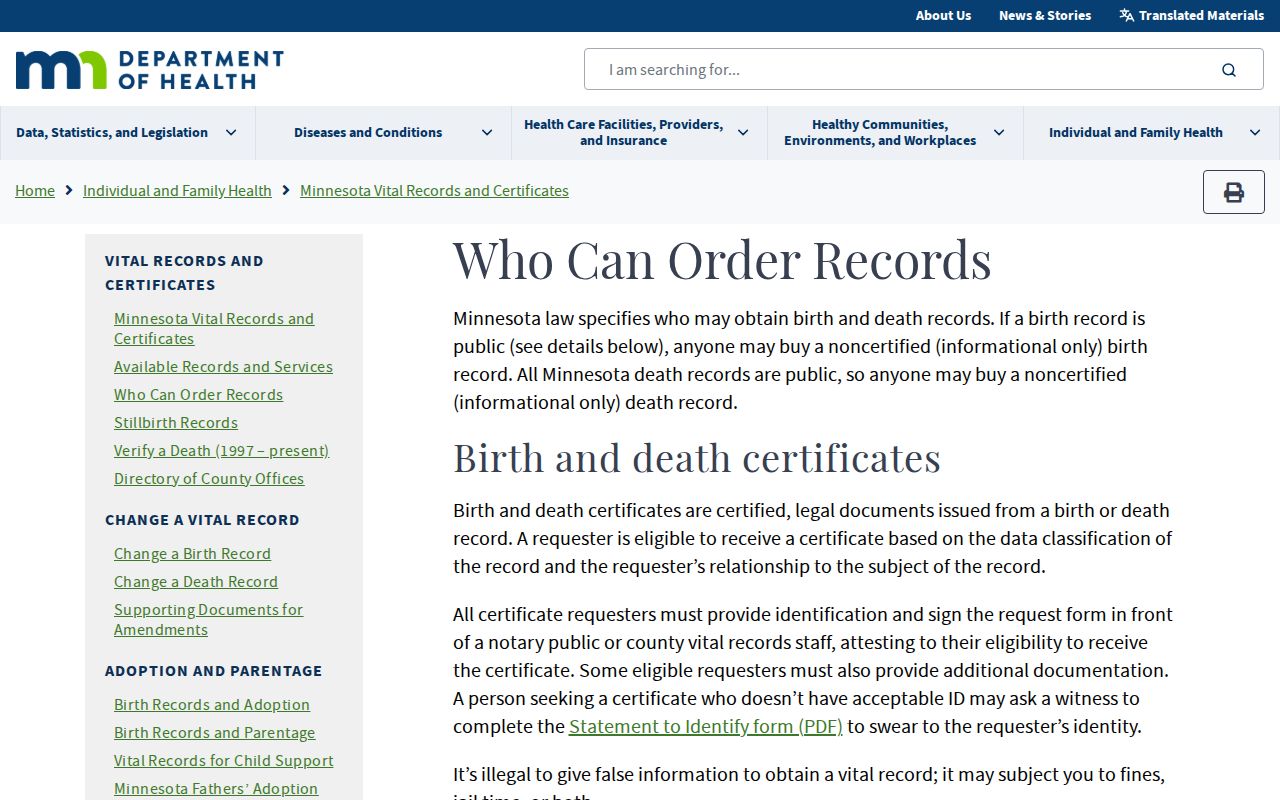
Confirm the event type and custodian first. Paying for a certificate, verification, or court copy before that check wastes money.
Note: A historical birth, death, or marriage record can support a date or relationship, but it does not confirm a present Lakeville address.
Lakeville Address Safety Protections
Some missing results are protections, not gaps to overcome. Minnesota Safe at Home gives qualifying residents a designated address, mail forwarding, and protected-address handling. Voters can seek withholding for personal-safety reasons. Court files can be sealed, confidential, juvenile, or otherwise restricted. A county tax account, voter entry, historical phone listing, or court result should never be used to infer a protected address. These records exist for their own purposes.
The Safe at Home program describes the qualifying safety route and its designated-address process.
Address confidentiality is a reason to stop a search, not a reason to chase extra sources.
Lakeville Property Watch and Copies
Dakota County’s Property Watch is a free alert service for future recorded documents. Enroll a person, entity, or legal-description entry. The program watches for new recordings that match. An alert includes the matched party, recording date, document number, and document type. It is not a title search and does not reach backward before signup. Common names can generate extra alerts. That makes it a useful Lakeville research tool for a bounded title question. It is not a directory of people.
Dakota County also warns about high-priced deed-copy mail offers. County instructions list deed copies at $1 per page or $10 for a certified copy. Office and mail routes exist for a specific document. The safest response to a payment demand is to begin at the county’s official recorder pages. Never use the phone number or link in an unexpected offer.
Open the Dakota County Property Watch form for the official program and its current notices.
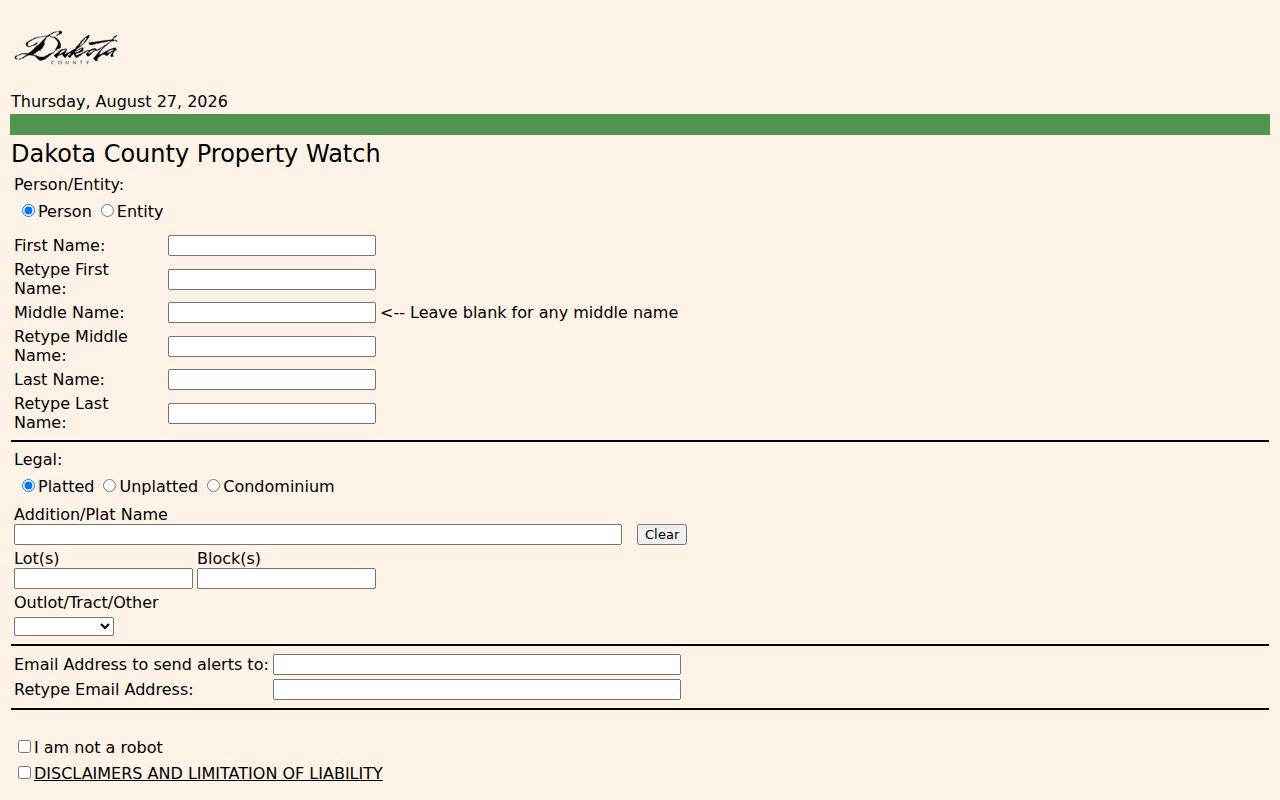
The image shows the county’s future-alert route, which belongs apart from historical ownership research and past-residents lookups.
Historical Lakeville Resident Directories
Lakeville’s strongest continuous historical directory lead is the Minnesota Historical Society telephone-directory finding aid. It identifies Lakeville holdings starting with a 1931 print volume. It then lists 1954. Annual or near-annual material follows across much of the 1960s through 1990s, and later volumes or sections run through at least 2011. The collection spans print and microfiche. A volume can supply a subscriber name and telephone number. It can also supply address or exchange context for its date. A missing listing, meanwhile, can reflect unlisted service or head-of-household conventions. It may also reflect a move or a coverage gap.
The Dakota County Historical Society adds census, church, cemetery, obituary, marriage-announcement, newspaper, and local-history leads. The digitized 1945 Central Telephone Directory is a period artifact. No legible individual Lakeville entry is quoted here. Use its date and directory structure rather than an invented transcription. The full collection method appears under City Directories.
Note: A directory entry documents a subscriber or listed household for a particular edition. It does not cover every person at an address.
Lakeville ZIP and Planning Geography
An address in Lakeville can carry two geographic labels at once. The city recognizes 55044 as its core delivery ZIP. North of Dodd Boulevard and east of Cedar Avenue, though, mail may carry a Rosemount 55068 address. South of Dodd and east of Cedar, Farmington 55024 can apply. The mailing city does not always match the municipal identity. USPS only certifies a delivery standard. It says nothing about who receives mail there. It also says nothing about whether the parcel sits inside city limits.
Other layers come from county parcel records, watershed data, school district maps, and planning files. Lakeville organizes itself into seven planning districts. These were shaped by land use, lakes, wetlands, roads, and infrastructure. These districts describe how a place fits together. They are not membership rolls for a neighborhood. Before placing a full address on an old map or residents directory page, run it through USPS and the county parcel system first.
Lakeville’s Layered Record History
Lakeville's past stretches back to an 1853 settlement. The road tied to Captain William B. Dodd reaches back just as far. Dakota County itself dates to 1849. That layered history matters for anyone tracing a name. An old Lakeville family can surface in township records, county files, and church registers. Plats, census schedules, and city papers can hold the same name too, rather than a single municipal folder. County maps survive in series covering 1916 through 1971, 1972 to 1986, and 1987 to 2004. A later series runs 2007 through 2025. The recorder's online abstract index starts July 8, 1993. Older deed books and microfilm still fill the gap before that date.
The strongest method pairs a date with a source type. A current parcel fixes the land. A recorded deed traces legal interest. A historic map verifies streets or plats, while a directory or census entry tests a household from a given period. The systems overlap, yet none replaces another. In Lakeville research, every fact stays trustworthy only when it keeps its date. It must also keep the custodian that gave it meaning.